Make it Bali, but in California: a $33 million Malibu home by an AD100 top designer

Make it Bali, but in California: a $33 million Malibu home by an AD100 top designer

  • Forbes
  • 03/9/26

When Indonesia arrived at the 1964 New York World’s Fair, it did not arrive quietly.

For its first appearance at the global exposition, the country’s pavilion spanned more than 30,000 square feet and included a 56-foot meru tower and an 86-foot candi bentar – the distinctive split-gate structure that marks the entrance to Balinese temples. Both were carved in stone in Indonesia then freighted to New York. If you were going to present Bali at its best to the West, imitation or approximation would not do.

Fifty years later, on a bluff in Malibu, top AD100 interior designer Martyn Lawrence Bullard pursued a version of that same idea. Not quite at world’s-fair-pavilion scale, but nevertheless ambitious for a private residence. Still, the challenge was similar. How do you build a house in California that doesn’t just borrow Balinese style, but captures some measure of its spirit?
Bullard, the English designer known from the Bravo TV series Million Dollar Decorators, as well as a starry client list that has included Kim Kardashian, Tommy Hilfiger and the late Ozzy Osbourne, understood that the answer would not come from mood boards alone. His clients for this project, a wealthy couple with a background in development, had fallen for the romance of a nearby Bali-inspired retreat and wanted to create one of their own.

Rather than begin with surface references, Bullard took his clients to the source. Over multiple trips to Bali, he had the couple stay in traditional homes, study how the spaces were arranged and pay attention to the things that cannot be replicated through photographs alone.

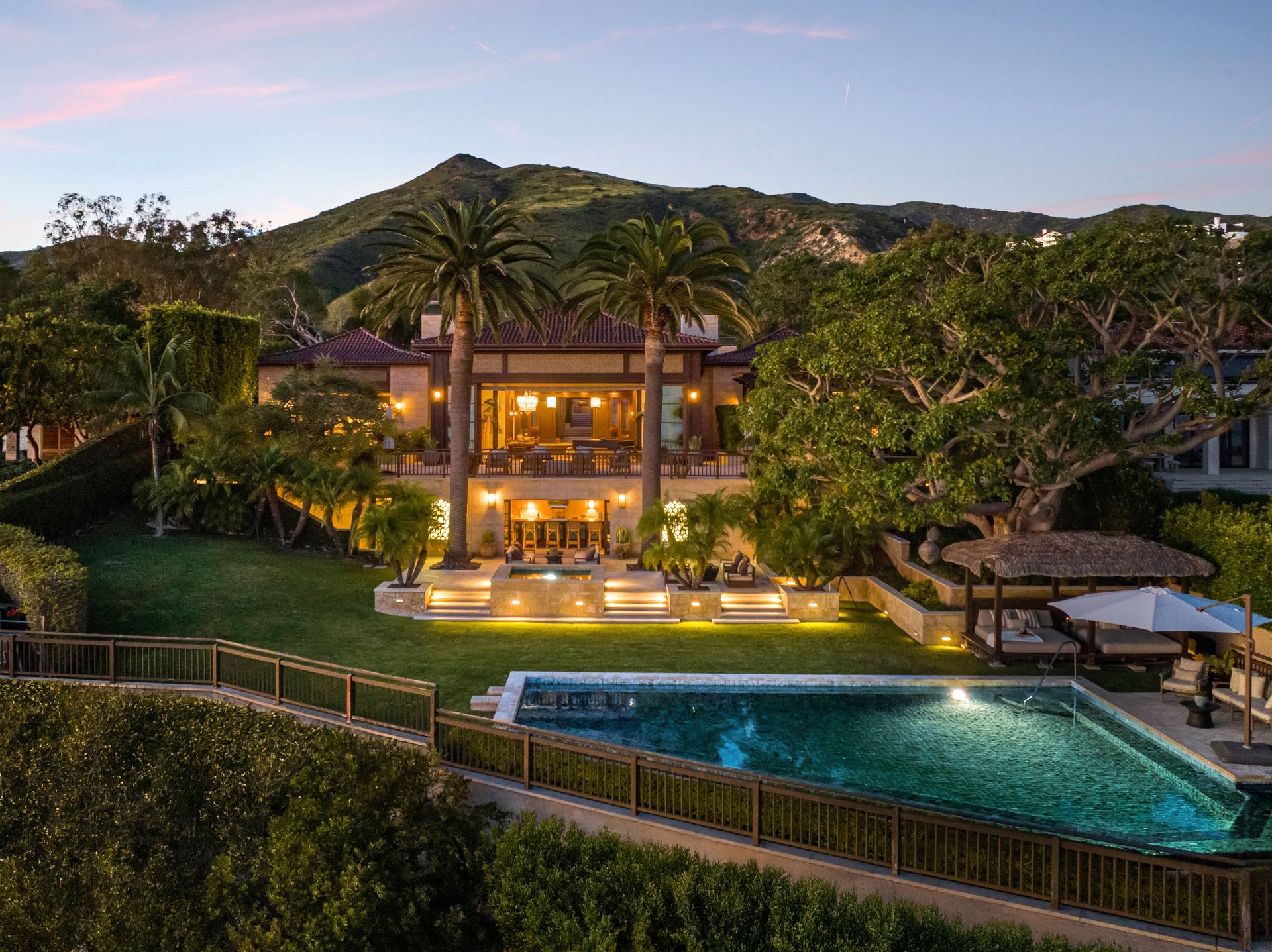
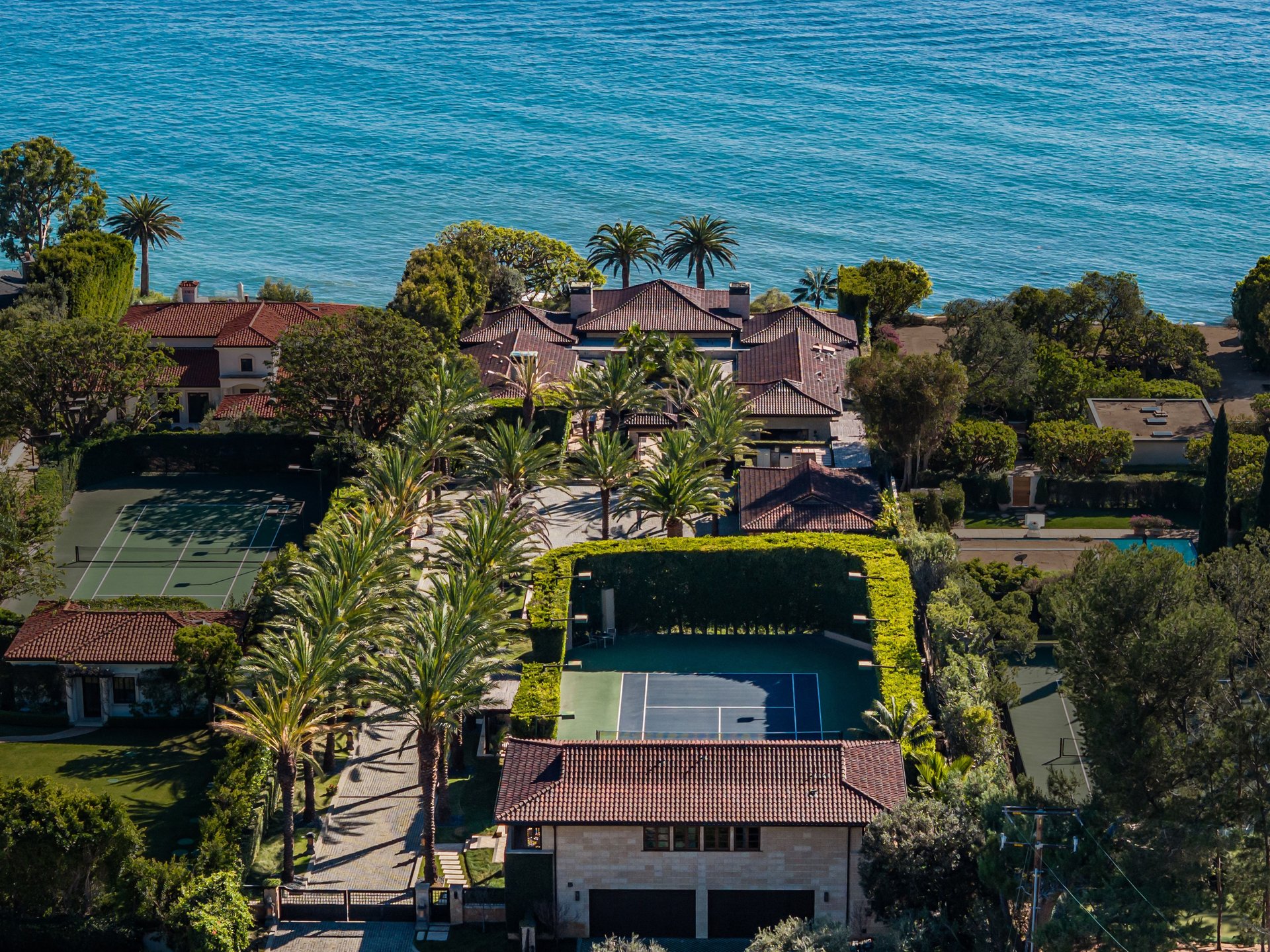
That field-trip education became the foundation for 24834 Pacific Coast Highway, a 1.6-acre estate now asking $33 million. 

Set directly off Malibu’s most famous ribbon of coastal asphalt, the property could have been at the mercy of passing traffic and highway noise. Instead, the moment you slip behind the gates, the volume drops. A long, palm-lined approach resets the senses. You feel as if you are not entering the grounds of a residence but of a private island resort. 

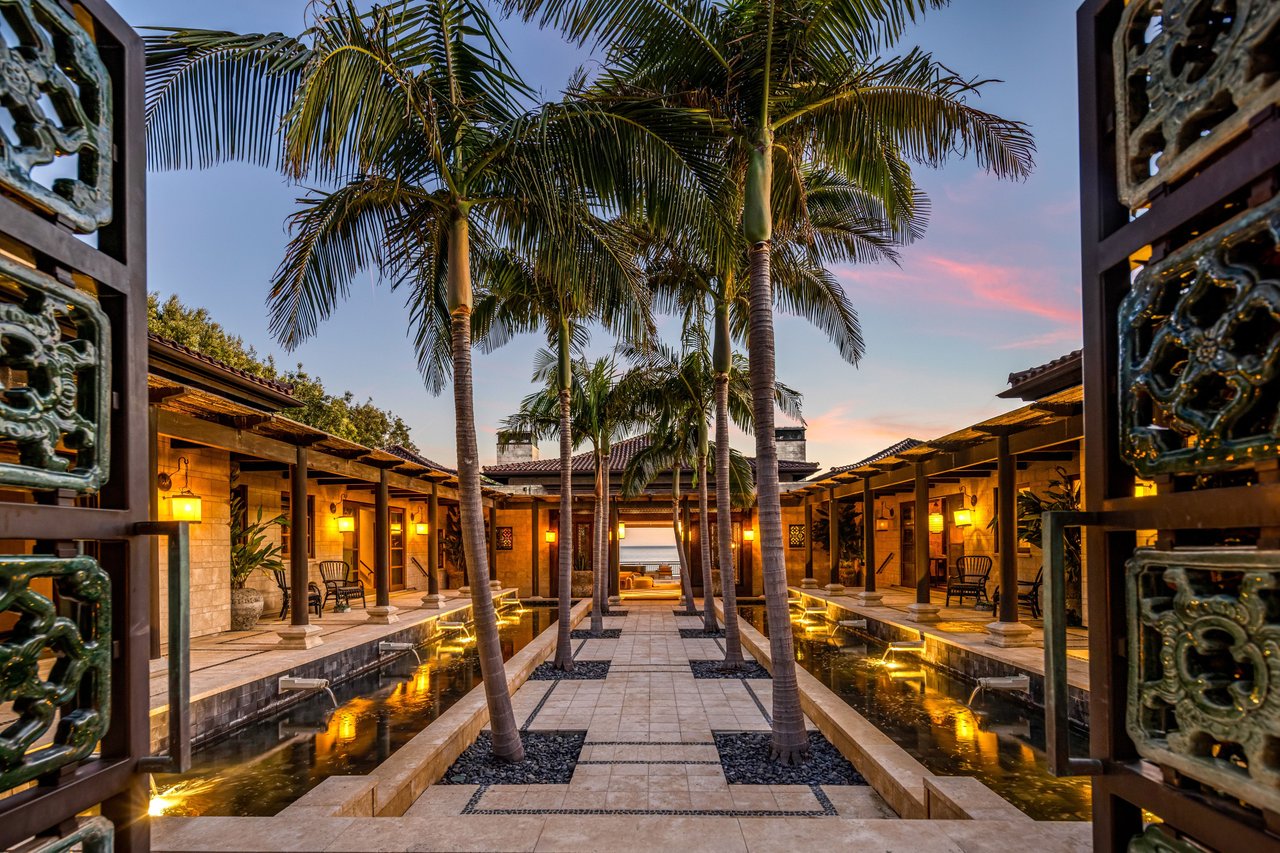
From first glance, the Bali-born influence registers. Three volumes form a U-shape around stepped terraces, courtyard gardens and reflecting pools, crowned by a pagoda-like meru roofline. The gates at the opening courtyard are faced in intricate Chinese “green wave” tiles, a motif long seen on Indonesian bridges.

And in true temple fashion, water handles the first act of storytelling: a tiered fountain and waterfall in motion, followed by the hush of still reflecting pools at the entrance to the inner courtyard.

What gives the house its conviction, however, is Bullard’s refusal to let its execution slip into mere fantasy. This is not a loose California interpretation dressed in imported accents. He went to the source, bringing back materials and architectural fragments with actual provenance rather than simply the right look.

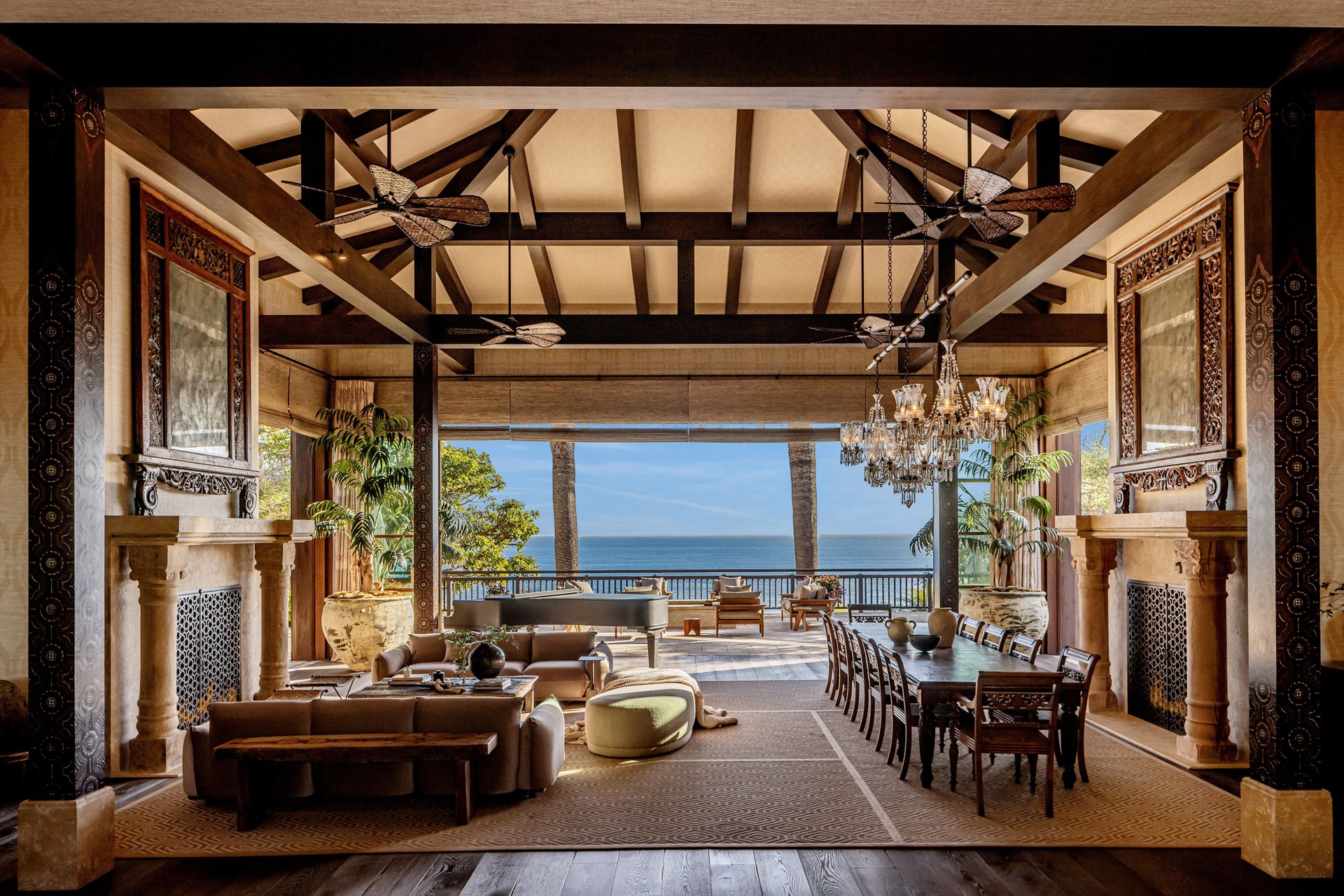
In the family room, the entry is framed by carved Balinese panels backed with mercury glass, all fretwork and flicker, like a shrine threshold. Handmade lanterns from southern Java float overhead. Fireplaces are assembled from 17th-century Indian sandstone columns. Windows and doors are cut from teak, a staple material across Indonesia.

In the library, antique wood fragments from Java mingle with touches from India and Morocco, while salvaged carvings from ancient Javanese buildings are threaded through the built-ins and lifted into the coffered ceiling, turning the room into a working archive. 

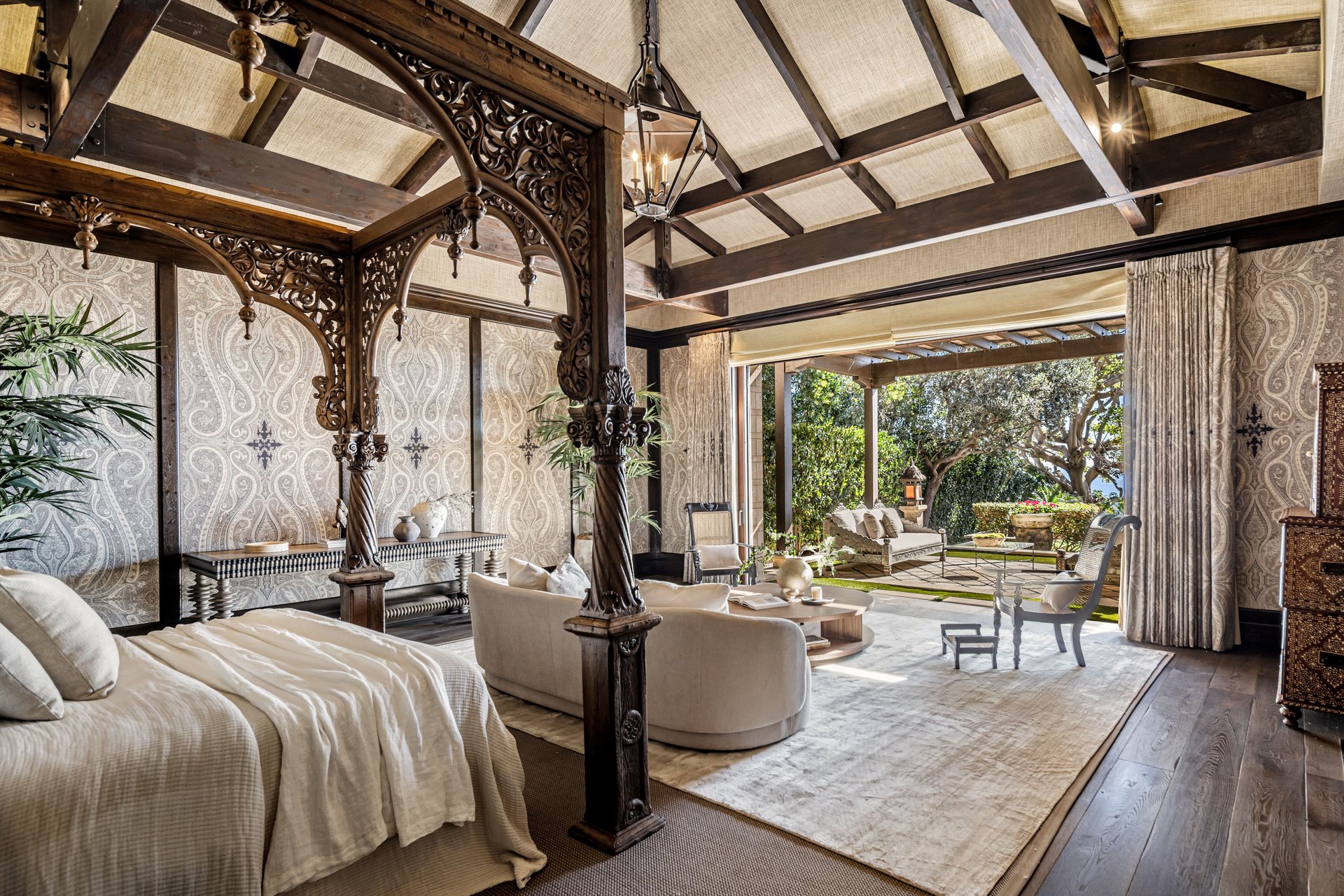
Pick any room and you’ll find the thesis repeated with vigor. The primary suite turns an Indonesian palace façade into a canopy. The bath layers an antique carved structure fashioned from a Rajasthani palace façade with custom-blown Hundi lanterns, a copper Waterworks tub, and a vanity modeled after an ancient temple in Ubud. Everywhere you look, the details don’t just nod to Bali. They insist on it.

Malibu, for its part, makes that insistence easier to sustain. With its sun-struck bluff, palm-lined approach and uninterrupted sweep of Pacific blue, the setting gives tropical architecture a credible stage. Bullard may have brought the language, but the coastline supplies the local accent. The result is a house where the journey from California to Indonesia feels surprisingly short.

Priced at $33 million, the listing for 24834 Pacific Coast Highway is held by David Parnes, Greg Davis, and Michelle Ficarra of Carolwood Estates.

Follow Us on Instagram