Long ago in history, c.1955-1970, the scattered tribes of Scandinavia jostled to lead the charge of mid-century design. From Finland, Eero Saarinen swooned New Yorkers with his sweeping curves at Idlewild airport. But, in the long run, the Danes won.
Arne Jacobsen was architect in chief, while Verner Panton and Børge Mogensen led a long line of interiors and furniture designers to claim posterity by bringing comfort and style to the world’s posteriors. We have all enjoyed a Danish chair.
So here we are today, halfway up a soft green undulating hill in west Los Angeles. All that confusion of desiccated shrub and lazy verdant pines. Then suddenly we find ourselves pinioned to that old mid-century Scandi manual of simple verticals and rigid horizontals. Because this astonishingly beautiful, monumental, thrilling piece of domestic architecture was designed by a Danish hand.
Thomas Juul-Hansen, born Copenhagen, graduated Miami. Absorbed the American songbook of building in the ’90s and runs a studio today out of Manhattan. And with all the integrity of his Danish forebears, resolutely brings discipline to the artifice of luxe.
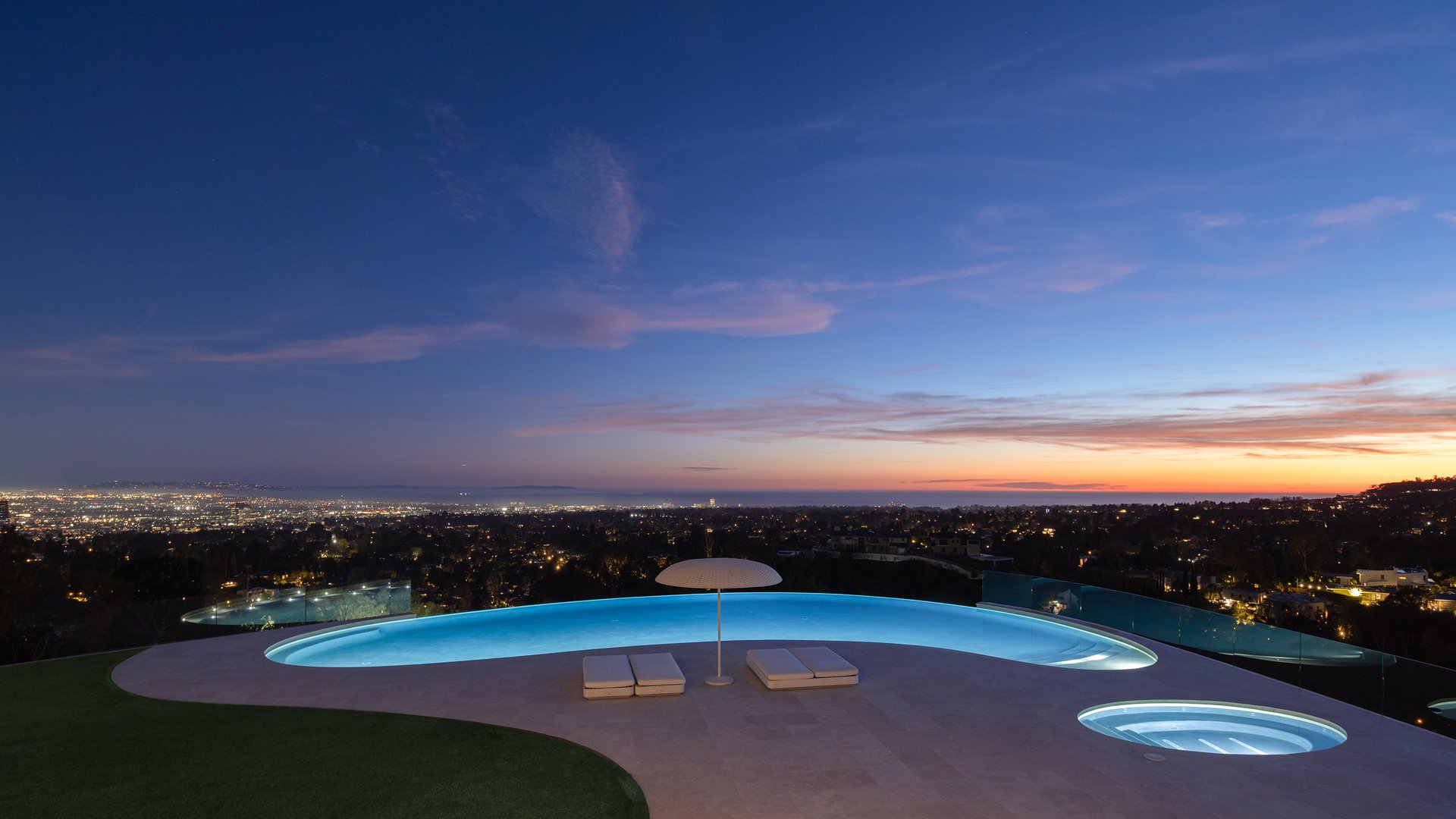
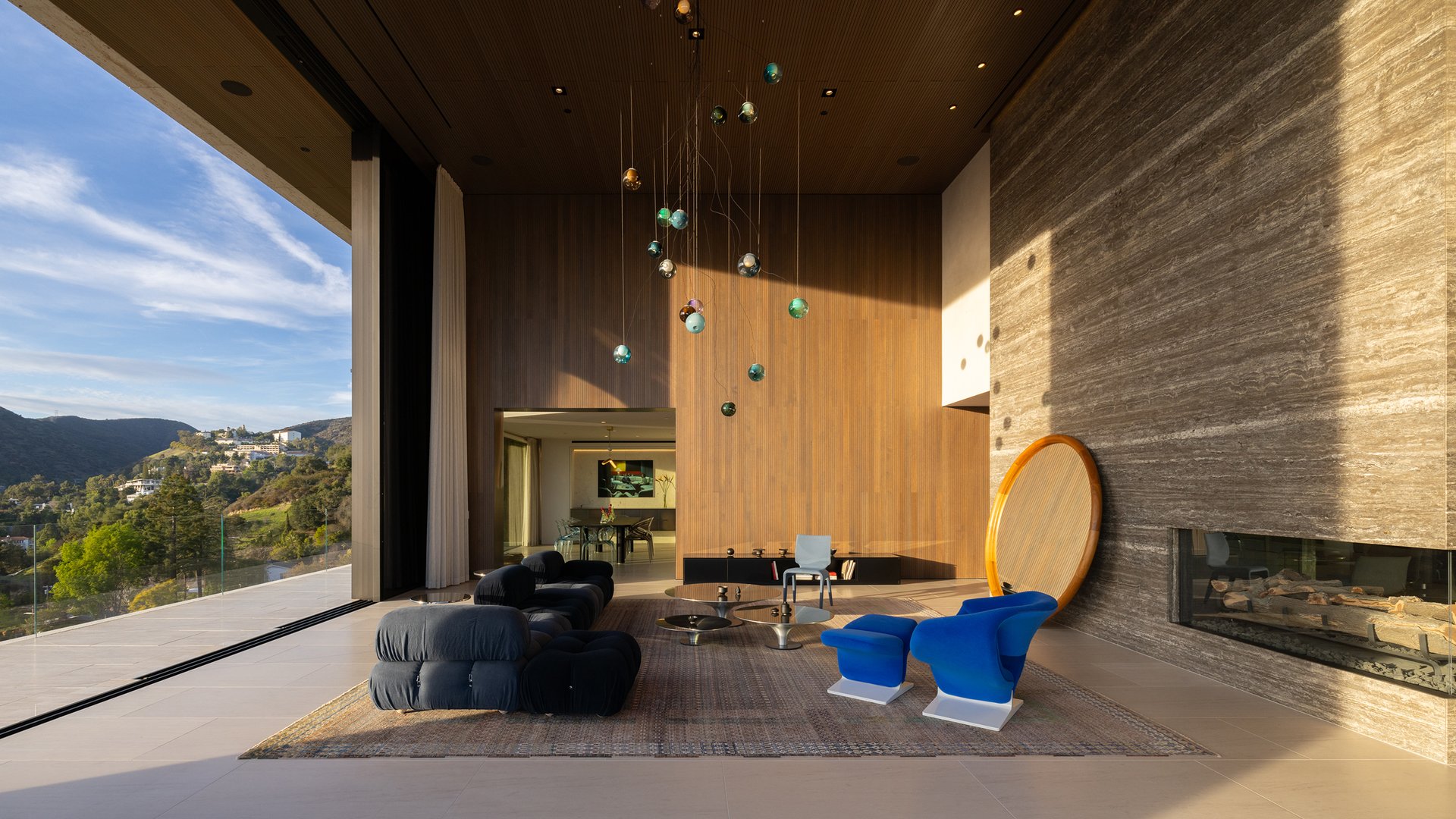
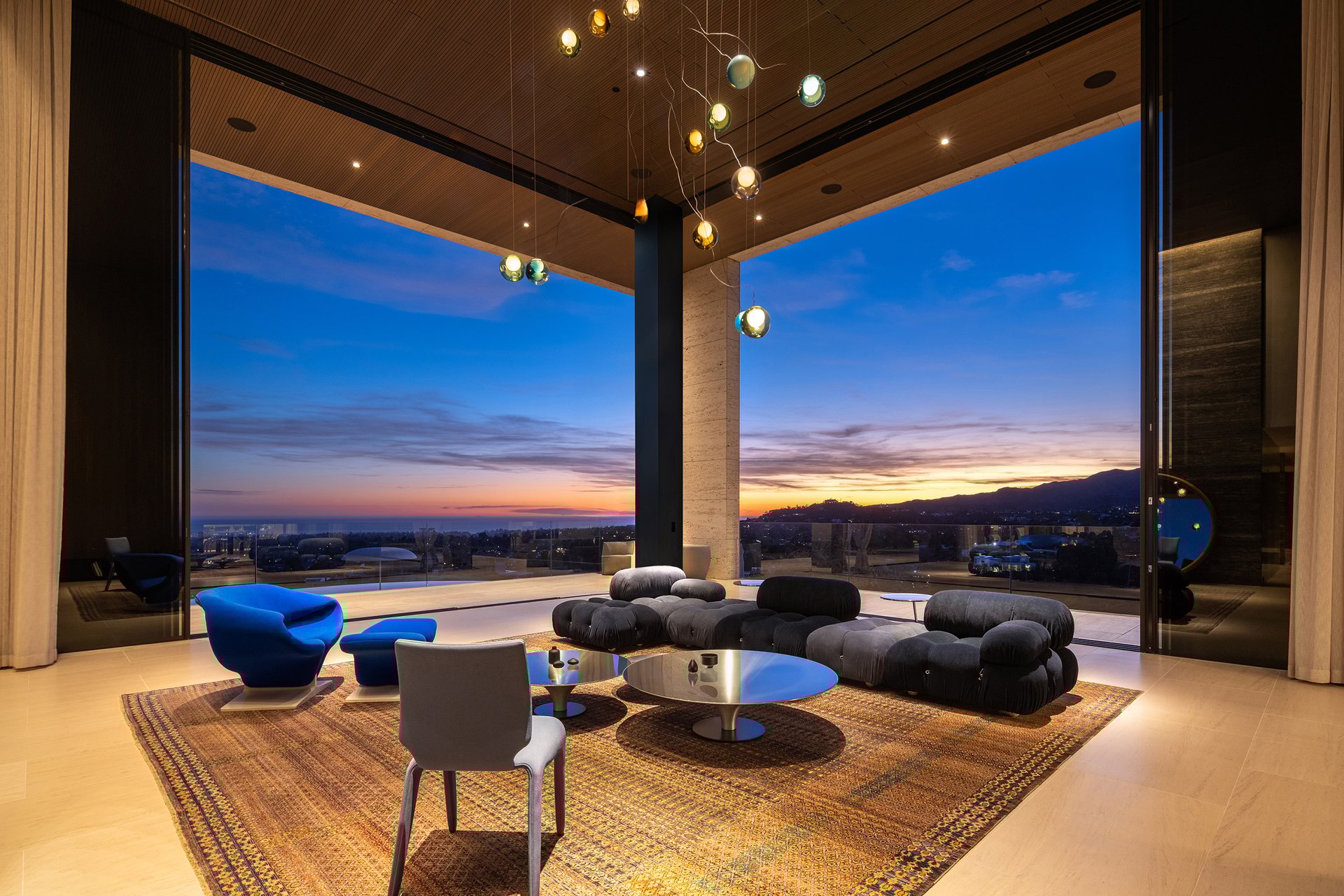
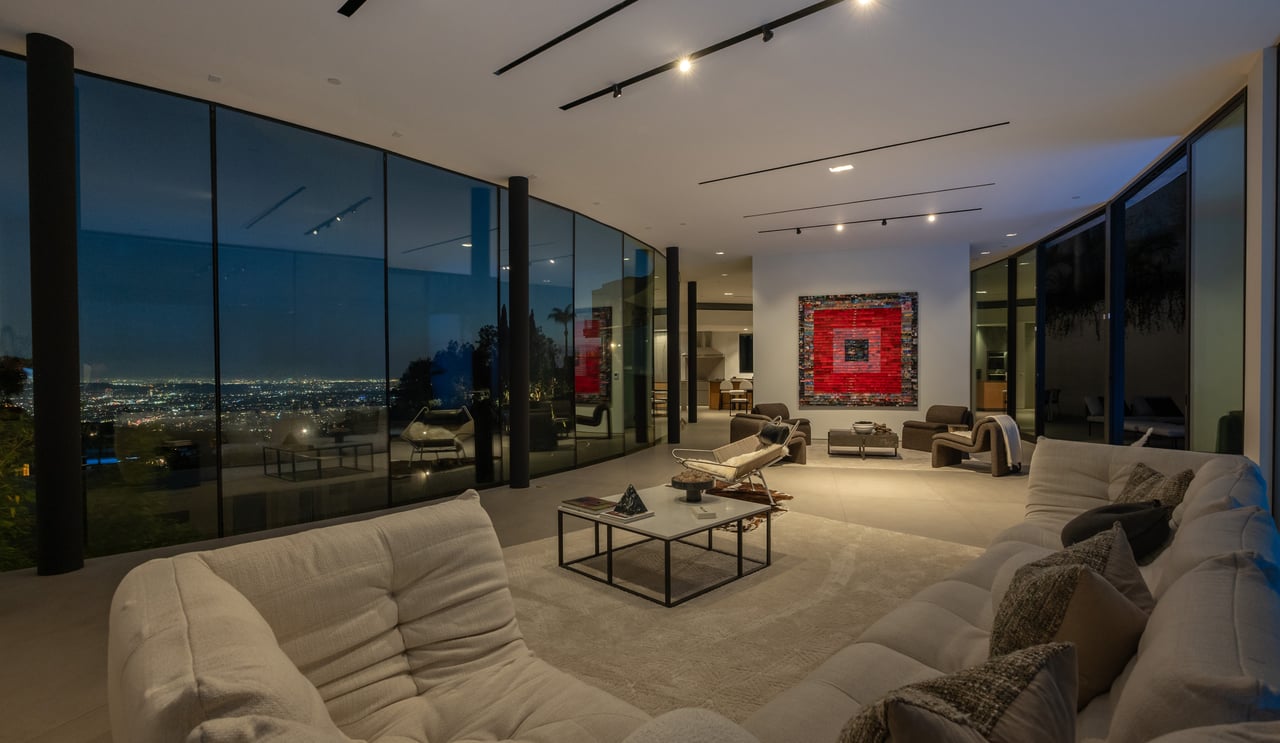
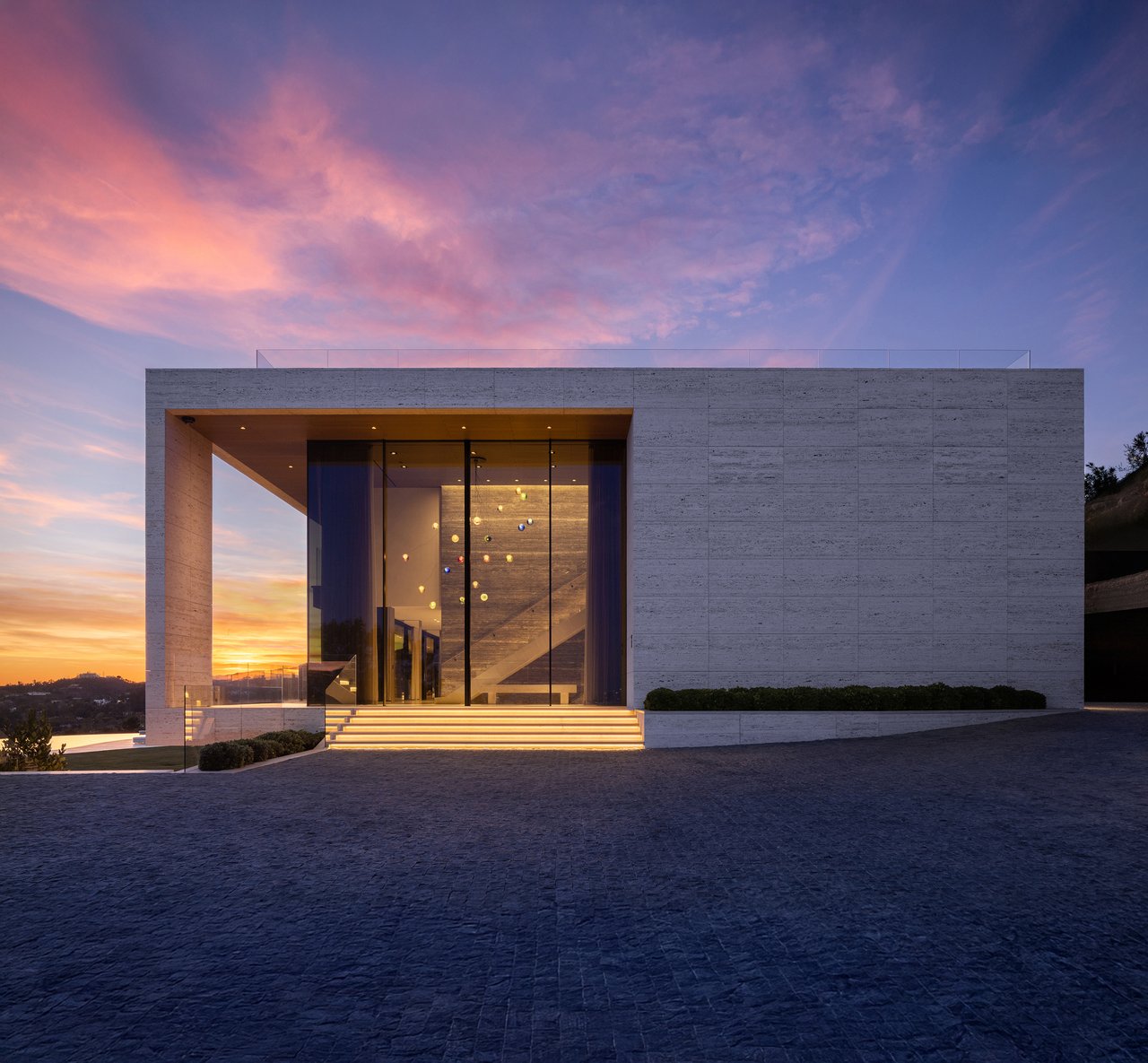
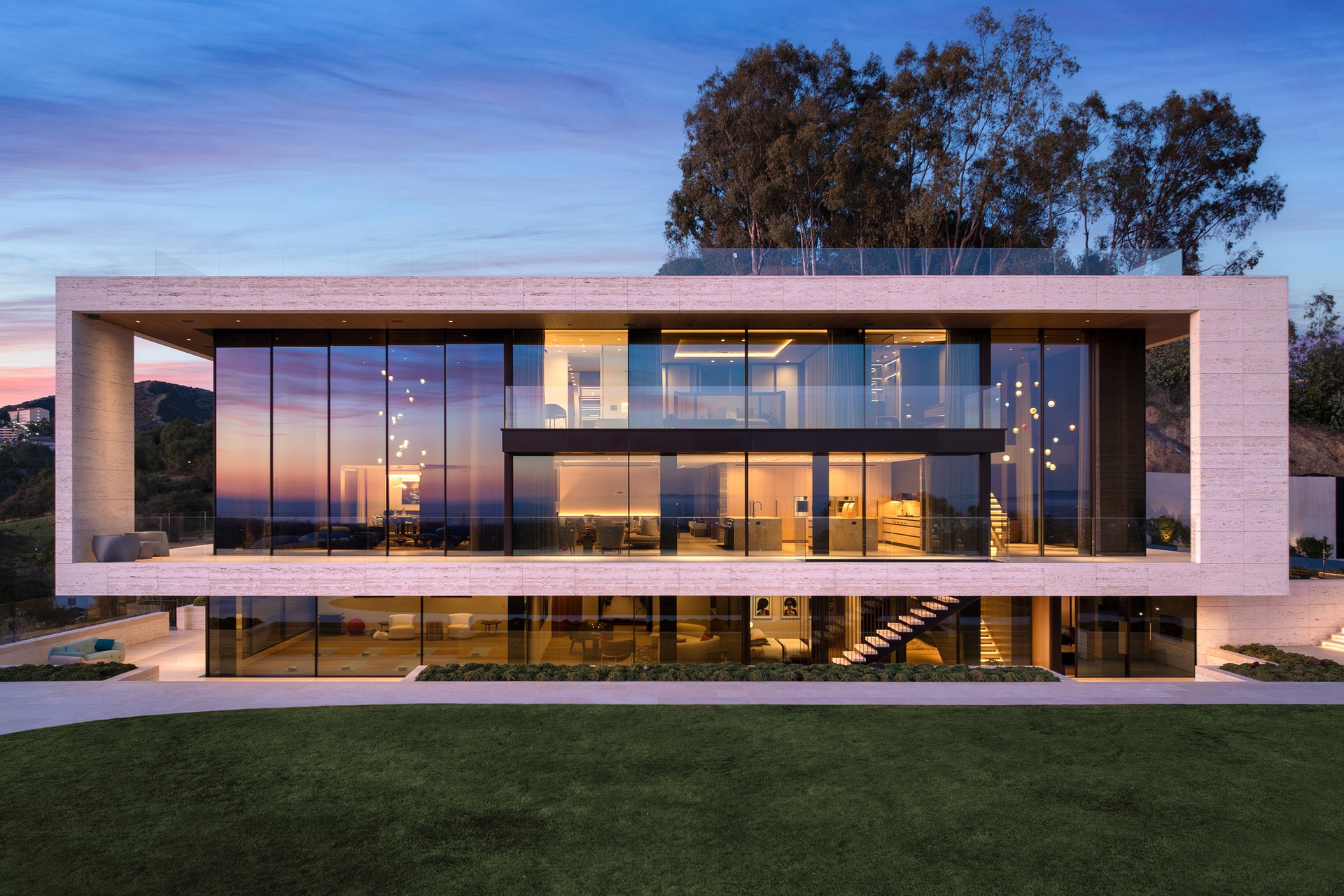
To find the house at 684 Firth Avenue, you drive up one of those steep, narrow cul-de-sacs slung with overhanging trees that snake lazily into the hills above the city. No thru traffic. But there’s nothing laid back about what greets the eye. Set back from a patinated granite-cobbled entrance forum sits a massive rectangle of blonde travertine stone with a wide rectangular cut-out, behind which is a wall of glass some six meters square. And that’s merely the side elevation. You feel you’re walking towards not a house but a civic art gallery of the highest order. This is a building of sculpted form.
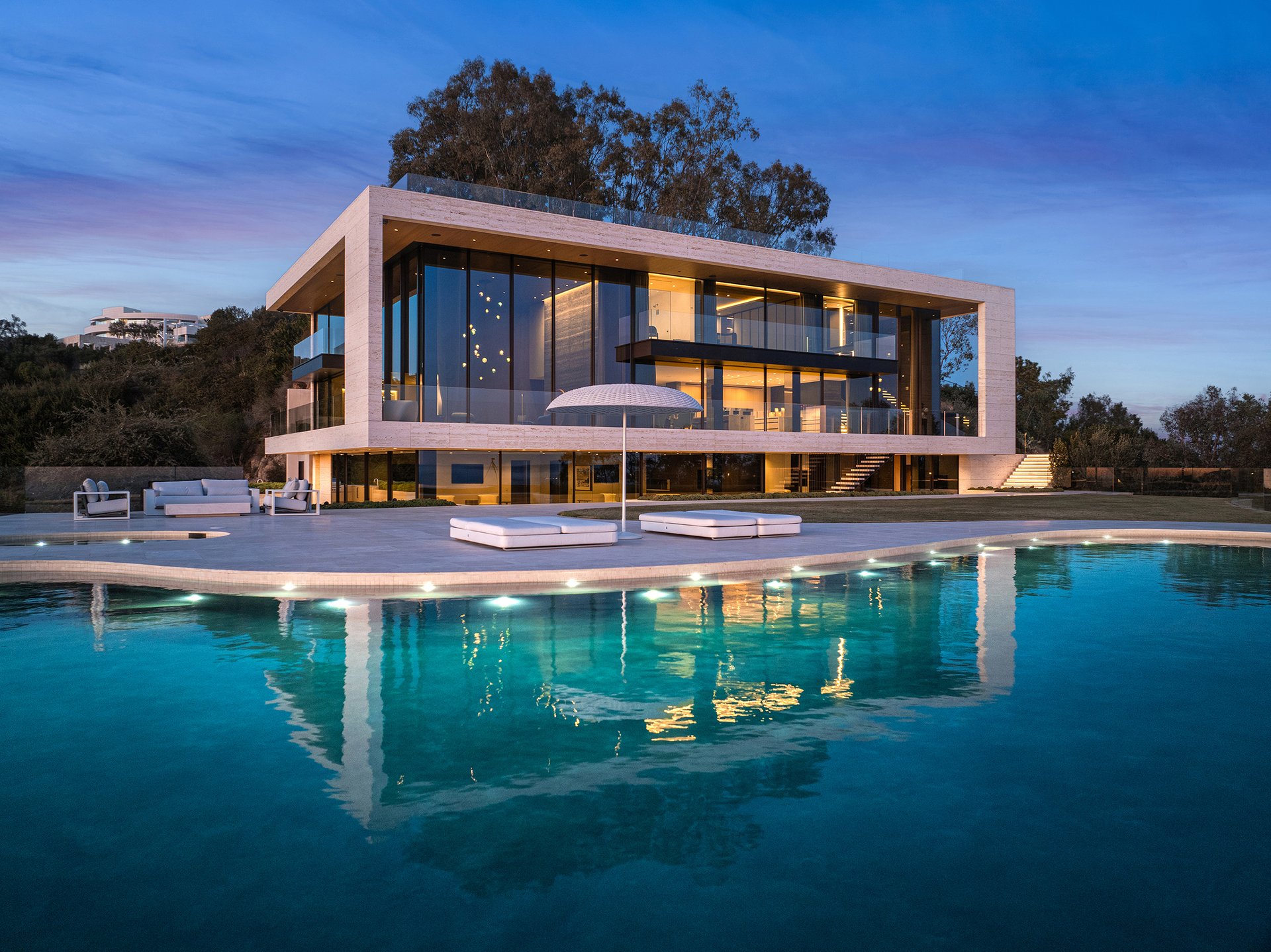
Juul-Hansen himself worked directly on the design of the new Getty Center, which opened nearby in Brentwood in 1997. Twenty-seven years later, for the property he designed on Firth Avenue and boldly called Getty House, his choice was to source the same travertine from the same quarry in Italy that supplied the stone for the Getty.
What sets a speculative project like 684 Firth apart from conventional new-builds designed to a client’s specification is that an architect’s purity of design ambition is given free rein. And so the stone was cut from the same Lippiello family quarry in Bagno di Tivoli, 20 kilometers east of Rome. Not only that, Signore Lippiello was delighted to continue the tradition and agreed to resume cutting from the same spot in the mountains where they’d finished cutting for the Getty.